Troubleshooting Tip: No Response from Amplifier on Your Controller

Always check to make sure the proper power is being supplied to the amplifier. For example our A4 Amplifier requires 24 VDC input whereas a M3200 utilizes 120/240 VAC. If the wrong voltage is supplied to the amplifier, the amplifier will not work and could potentially permanently damage the amplifier. Ensure the output signal wires […]
Dead Shaft Idler Load Cell Installation Considerations
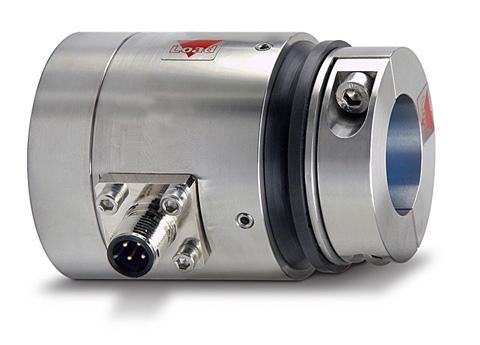
When installing your ES Series Dead Shaft-Idler load cells there are a few key considerations to ensure proper installation. Follow the provided installation instructions with your components, but if you are experiencing some issues, check the following: Idler Roll Support The load cells should be supporting the roll as if the roll were attached directly […]
Troubleshooting – Can’t Get My Setpoint or Air Pressure Above XX
Tension Controller Troubleshooting: “Can’t Get My Setpoint or Air Pressure Above XX” Depending on where your controller is in its service life, and if a controller has been moved from a different machine, or is simply running a different process, certain process parameters might have been changed that need to be changed within the controller. […]
What to do When Your Tension Reading is Not Steady
When your tension reading is not steady, we often recommend switching the controller into manual mode to help diagnose the problem. If in manual mode and the tension reading is steady, contact a Montalvo Applications Specialist. It may just be simply that the controller is not tuned properly and there just needs to be a […]
What is Progressive Gain?
Most people that are tasked with the tuning of controllers are familiar with three terms; Proportional Gain, Integral Gain, and Derivative Gain, better known as PID. These adjustments are often referred to as “Controller Gain” as they determine the controller’s responsiveness to disturbances. However, in many cases, the dynamic behavior of the actual process may require […]
Can a Tension Control System Pay for Itself Before Installation? Yes.
Can a Tension Control Package Pay for Itself Before You Even Factor in Your Productivity Gains and Process Benefits? Yes. Our Torque Sensing Control System (TSC) eliminates the needs for load cells, dancers, isolation rollers, and larger machine space. Add it all up and compare it to the cost of a TSC System and the […]
Utilizing the Z4 Data Logger to Troubleshoot Your Application
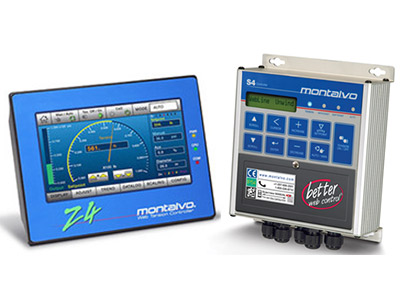
Montalvo’s new line of Z4 Tension Controllers, designed for Unwind, Intermediate/Nip, and Rewind applications utilizing load cells, a dancer, or both has a built in data logger for monitoring, analyzing, and troubleshooting application run data. Recently a customer with a Dancer based application was running into difficulty, and presumed the problem to be the controller. […]
A4 Amplifier v1.3 Release
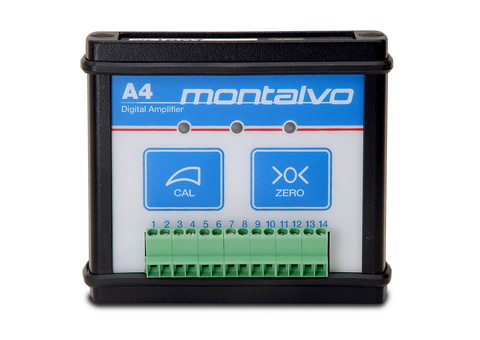
Improved Compatibility and Performance The A4 Digital Amplifier blends performance and convenience in one compact package. Compatible with both semiconductor strain gauge and foil gauge load cells The A4 delivers push button calibration, push button zero-ing, automatic load cell fault detection and USB integration for remote calibration and monitoring. Available now, the A4 Amplifier v1.3 […]
New Coast Controls Shifting Roll Stand with Tension Control System
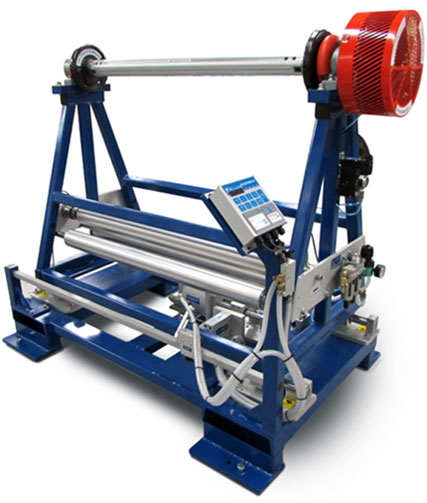
Coast Controls Announces Newest Unwind Shifting Roll Stand Featuring Montalvo Tension Controls. April 6, 2016, Sarasota, FL, USA – Coast Controls, Inc, exclusive manufacturers of all air web guide systems, is announcing the launch of its latest Unwind Shifting Roll Stand (SRS), the SRS4-R15-U. The SRS4-R15-U is designed as a simply supported Shifting Roll Stand […]
Dancer or Load Cells – Which Should I Use?
I am frequently asked this question, and my standard answer is that: it depends. It depends upon the type of process (slitting, printing, coating, laminating, die cutting, etc.), the range of products being run (rigid, extensible, deformable, etc), whether flying splices and/or turrets are involved, and incoming roll condition. Dancers are very effective at minimizing […]